
Each Council has a specific planning scheme that provides a framework and policies on land use and development.
Incorporating Environmentally Sustainable Design (ESD) into new development is now a requirement under the Planning Scheme for most Councils. The overarching objective is that development should achieve best practice in ESD from the design stage through to construction and operation.
The policy provides objectives and application requirements for residential, mixed use and non-residential development. It recognises the importance of considering ESD at the time of planning approval for new development.

A planning permit application will generally require information across the areas of energy efficiency, water efficiency and management, indoor thermal comfort stormwater management, sustainable transport use, waste management and sustainable landscaping. Council’s commonly group these elements under the “Sustainable Design Assessment in the Planning Process” (SDAPP) framework.
The required information is proportionate to the scale and complexity of the proposed development. A Sustainable Design Assessment (SDA) is a document that sets out the ESD features of a proposed development.
Our experienced consultants will assist you with the preparation of an SDA for your project. Giving you recommendations for the ESD features that suit your development and satisfy planning permit conditions.
Are you aware that an energy rating assessment will be required for the planning permit? Ask us about our bundled price for a combined SDA and Energy Rating Assessment.
“I have been working with the team at V-Star Energy for the last 3 years and it is always a pleasure to work with them. Their turn around time is quick and they always work with the designer for a practical solution to enhance the design outcome.”
Thomas Lui, Architect, Livable Housing Australia Assessor

Don’t Get Cold Feet: Why Slab Edge Insulation Is Often a Mandatory Must-Have
Posted on February 10th, 2026 / V-Star Energy If you’re planning a new build in Australia, the term “concrete slab edge insulation” has likely appeared on your energy efficiency plans. A common question we hear is: “Do we really need this? Can we remove it to save cost?” At V-Star Energy, we understand this query. The answer…

NCC 2025 Preview: Key Changes for Builders and Developers
Posted on February 5th, 2026 / V-Star Energy The Australian Building Codes Board (ABCB) has released its much-anticipated NCC 2025 preview, setting the direction for the next wave of building regulations. While this is a preview and details may evolve before the final publication, the core priorities are clear. At V-Star Energy, our first read is…
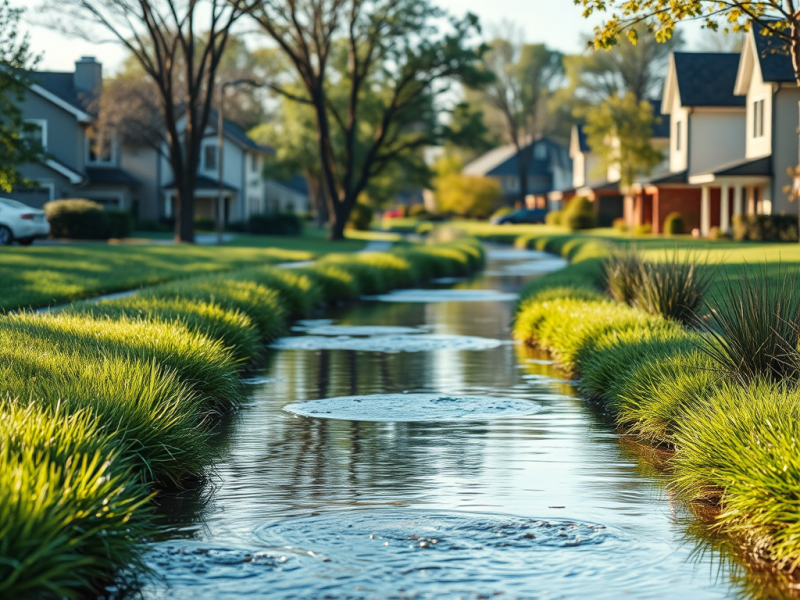
Embracing the Next Generation of WSUD Reporting: V-Star Energy Transitions to Blue Factor
23 October 2025 | V-Star Energy Change is on the horizon for Water Sensitive Urban Design (WSUD) reporting in Victoria. The well-known STORM tool is now retired, and a new, modernised platform—Blue Factor—is taking its place. Our team at V-Star Energy has already completed the transition to Blue Factor, ensuring a seamless and uninterrupted service for…
 Building Thermal Rating Assessors