Embracing the Next Generation of WSUD Reporting: V-Star Energy Transitions to Blue Factor


23 October 2025 | V-Star Energy

Change is on the horizon for Water Sensitive Urban Design (WSUD) reporting in Victoria. The well-known STORM tool is now retired, and a new, modernised platform—Blue Factor—is taking its place.

Our team at V-Star Energy has already completed the transition to Blue Factor, ensuring a seamless and uninterrupted service for all your projects.


What is Blue Factor?

Blue Factor is the official successor to the STORM tool, designed to help assess stormwater runoff and pollutants from a development and determine the treatment measures needed.

Like its predecessor, it is intended for use with small-scale developments of less than 1 hectare, including small-scale residential and simple commercial projects.


Why This Change Reinforces the Importance of WSUD

This tool update is part of a continued commitment to protecting our waterways. WSUD is an approach that integrates the water cycle into urban planning, treating stormwater as a valuable resource rather than a nuisance.

The core goals remain the same:

  • Protecting and enhancing our creeks, rivers, and wetlands.
  • Improving the quality of water draining from urban areas.
  • Restoring the water balance by reusing stormwater where possible.

Using the correct, up-to-date tool to demonstrate how your development meets these goals is a mandatory step in the planning process for most new developments in Victoria.


Your Partner for a Smooth Transition

The shift from STORM to Blue Factor is more than just a change of software. It represents an evolution in how we manage urban water. At V-Star Energy, we have invested in the transition and have already successfully integrated Blue Factor into our workflow.

By working with us, you benefit from:

  • No Delays: Immediate capability to produce compliant Blue Factor reports for your new projects.
  • Expert Guidance: Clear advice on how the transition impacts your current and upcoming projects.
  • Peace of Mind: Confidence that your WSUD compliance is handled with the most current and council-accepted tools.

Ready for Your Next Project? Don’t let regulatory changes slow down your development timeline. If you have a project in the pipeline that requires WSUD reporting, contact Stephen at V-Star Energy today.

NCC 2025 Delayed Until 2029: What It Means for Your Building Projects

In a significant announcement yesterday, the Australian government confirmed a pause on non-essential changes to the National Construction Code (NCC) 2025 until mid-2029, extending the current NCC 2022 standards for residential buildings. Here’s how this affects your projects and what you need to know.


Key Changes Under the Delay

  • Current Standards Remain: NCC 2022 provisions (e.g., 7-star NatHERS, Whole-of-Home assessments) still apply.
  • Exclusions: Essential safety, quality, and accessibility updates will proceed.
  • No New Requirements: No new residential energy efficiency or sustainability requirements will be introduced until 2029.

What stays the same?

  • State-Specific Rules: BASIX (NSW), NABERS, and other state-level requirements remain in force.
  • Commercial Building Standards: Section J (energy efficiency) and other commercial provisions are unaffected by the residential pause.
  • 7-Star NatHERS + Whole-of-Home: remain critical for compliance under NCC 2022.

The Path Ahead

While the NCC 2025 delay extends regulatory stability, Australia’s transition toward sustainable buildings remains inevitable. At V-Star Energy, we’re here to help you navigate current standards, leverage cost-saving opportunities, and prepare for the next wave of changes. For now, stakeholders should:

  • Invest in Energy Efficiency: Voluntarily to future-proof assets.
  • Advocate for Pragmatic Reforms: During consultation periods.
  • Monitor ABCB Announcements: For safety-related updates.

Conclusion

The government will use the pause to simplify the NCC and align future updates with housing goals. For now, stakeholders should stay informed and proactive. 

Further reading – link to the media release

Need guidance? Contact us at info@vstarenergy.com.au for a no-obligation quote.

Window-to-Wall Ratio

The ideal percentage of glazing to wall—often referred to as the window-to-wall ratio (WWR)—depends on several factors, including the building’s orientation, climate, and intended use. Here’s a general guideline for different orientations:

North-Facing Walls:

  • Ideal WWR: 20-40%
  • Reason: North-facing windows (in the Southern Hemisphere) receive the most consistent and beneficial solar gain throughout the year. A higher glazing percentage can optimize passive solar heating and daylighting, which can enhance energy efficiency and comfort.

South-Facing Walls:

  • Ideal WWR: 10-20%
  • Reason: South-facing windows receive less direct solar gain, especially in winter. Limiting glazing helps to reduce heat loss and prevent excessive cooling loads. However, strategic placement of high-performance windows can still contribute to daylighting without compromising energy efficiency.

East-Facing Walls:

  • Ideal WWR: 10-25%
  • Reason: East-facing windows benefit from morning sun, which can be useful for passive solar heating in the morning but can also cause overheating in the summer. Balancing glazing with shading devices is important to manage heat gain and glare.

West-Facing Walls:

  • Ideal WWR: 10-25%
  • Reason: West-facing windows receive strong afternoon sunlight, which can lead to overheating and glare issues. It’s crucial to use shading devices or limit glazing to manage these effects effectively.

General Considerations:

  • Climate: In colder climates, a higher WWR can improve passive solar heating. In hotter climates, a lower WWR helps reduce cooling loads.
  • Shading and Glazing Performance: The use of high-performance glazing and shading devices can allow for a higher WWR while managing solar gains and heat loss more effectively.
  • Building Use: The intended use of the building (e.g., residential, commercial, or office) can influence the optimal WWR based on factors like lighting needs and privacy.

These percentages are starting points and should be adapted based on specific design requirements, local climate conditions, and performance goals. Energy modeling and consulting with building professionals can provide more tailored recommendations for achieving the best balance of daylighting, thermal performance, and energy efficiency.

NCC 2022 State Extensions

In addition to our post on Victoria‘s decision to extend the implementation of NCC 2022 Energy Efficiency provisions to 1 May 2024, other states have also announced date extensions. Here’s the current run down:

New South Wales – new homes contracted before 1st October 2023 are exempt from the new sustainable building (BASIX) standards until 30 June 2024. Read more.

Australian Capital Territory – NCC 2022 has been delayed from 1 October 2023 and will now come into effect on 15 January 2024. Read more.

Queensland – The Residential energy efficiency standards will commence on 1 May 2024 through the updated Queensland Development Code Mandatory Part 4.1 – Sustainable buildings (QDC 4.1). Read more.

Here is a link to our presentation on the NCC 2022 Energy Efficiency provisions.

VIC NCC 2022 date extension

In recognition of the significant global economic challenges that the building industry is experiencing, the Victorian Government’s Minister for Planning has announced that the transitional period for the NCC 2022 energy efficiency requirements has been extended to a revised mandatory commencement date of 1 May 2024.

Previously due to commence, 1 October 2023, the requirements include an increase from 6 to 7-star NatHERS energy rating and a new Whole Of Home (WOH) assessment rating out of 100.

The Australian Building Codes Board (ABCB) state that the extension will provide those builders who need it, more time to prepare, while still encouraging voluntary compliance with the standards.

This comes at a time when the Federal Government announced a $2 billion Social Housing Accelerator with a commitment to deliver thousands of new social homes across Australia.

Further information on the NCC 2022 state and territory adoption dates is available on the ABCB website.

Contact us if you have any questions or would like assistance with your building project.

NatHERS explained

Here are a couple of informative videos recently released by Nationwide House Energy Rating Scheme (NatHERS) that explain the scheme and the new Whole of Home assessment.

Feel free to get in touch if you have any questions or would like assistance assessing your building project.

Further information can also be accessed by visiting the NatHERS website.

What to expect with NCC 2022

With adoption of NCC 2022 Energy Efficiency provisions, commencing 1 May 2024, the NatHERs energy rating requirement is changing from 6 to 7-stars and the Whole of Home assessment will be a new inclusion.

As energy raters, we have been working with our clients to prepare for this change and have created the below presentation that explains the NatHERS energy rating changes along with real-life implementation examples.

We have also created a one-page Whole of Home questionnaire to make gathering data a breeze.

We hope you find this information useful. Please feel free to contact us if you have any questions.

You can also read our blog on passive solar design


NCC 2022 Release

The much-anticipated National Construction Code (NCC) 2022 rule changes have been approved by Building Ministers. NCC 2022 is scheduled to be published on the 1st October 2022, with an expectation that States and Territories will adopt the new rules from 1 May 2023, with transition periods for new livable housing requirements, new energy efficiency and condensation mitigation requirements from 1 October 2023; and new low lead in plumbing product requirements from 1 September 2025.

As Thermal and Sustainable Design assessors the lifting of the Nationwide House Energy Rating Scheme (NatHERS) from 6-star to 7-star and the introduction of Whole of Home assessment are significant changes that we have been preparing our clients for.

Under the current 6-star requirement, R6.0 bulk insulation to the ceiling of the roof space and R2.5 wall insulation has been standard practical low-cost specifications for achieving certification. In most cases, this will not be enough to meet the coming 7-star rating. An insulated slab and Low-E thermally broken double glazing can bridge the gap but will increase the cost of the project. It’s important to consult with an Accredited Thermal Assessor early in the concept design stage of your project for assistance in improving thermal performance through passive solar design. Some simple design measures can have a big impact – see our blog for further information here.

The Whole of Home assessment is a completely new element to NatHERS certification, adding the energy efficiency of major appliances to the assessment, along with carbon offset measures.

Under NCC 2022 you will be required to select the type and energy efficiency rating of heating, cooling, cooking, lighting, hot water appliances, pool pumps, and pool heating that is to be installed. With an understanding of the complete energy use of the building your accredited thermal assessor will work with you to understand the measures required for the building to be carbon neutral. We see that this will initially include the installation of a suitably sized Solar PV system, though will expand as new technology such as battery storage reduce in price.

Here is a link to the new design of the coming NatHERS certificate, where you can familiarise yourself with how the NatHERS energy rating and new Whole of Home rating will be presented.

Feel free to get in touch to discuss NCC 2022 and what it means for your next building projects to comply with the NCC 2022 energy efficiency provisions.

Designing for 7-stars: Passive Solar Design

As part of our preparation for the proposed change to a minimum 7-star NatHERS rating, we revisit the benefit of passive solar design. Not only is its application fundamental to achieving a 7-star energy rating, but the benefit is clear: passive solar design adapts a building to its environment creating a comfortable home throughout the year; minimising the need for mechanical heating and cooling; resulting in lower household energy use, lower energy costs, and smaller carbon footprint.


At the concept stage of a building project, an understanding of climate location is fundamental to creating a design that adapts to environmental factors. For example, a building designed for a cool climate harnesses and stores heat from the sun during winter and provides shading and ventilation during summer.


Here are some of the key principles of passive solar design to keep in mind for building projects in the southern half of Australia:

  1. Orientation and Siting – a rectangular building where the longest walls face north/south, concentrating the habitable room area, utilising the suns heat during winter whilst minimising during summer through shade and ventilation. Take into account shading from neighbours, vegetation, landform, setbacks and easements.
  2. Layout – locate living areas to the north to benefit from daytime sun, bedrooms rooms to the south and unconditioned utility rooms to the west.
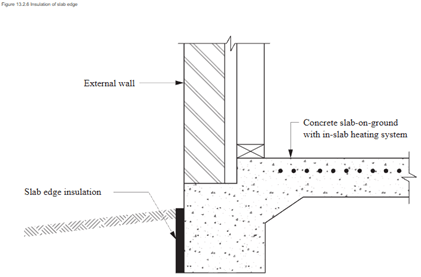
  3. Thermal mass – use and expose the building slab to winter sun, so that it stores heat throughout the day and releases that heat throughout the night. In summer the slab provides a cooling benefit by drawing heat from the rooms above during the day. Natural ventilation can then transfer the releasing heat during the night to the outside. Slab insulation is becoming more common to optimise the benefit of thermal mass.
  4. Building materials and insulation – choose building materials for walls and ceiling combined with insulation to retain heat within the building during winter and provide protection from daytime heat during summer.
  5. Windows – as a rule of thumb 50% of the northern wall area should be glazed, whilst 15% to the east and west and 10% to the south. Openable windows provide natural ventilation during summer. Select windows that provide a balance of properties that insulate the home (low U-value) and allow the sun’s rays to provide warmth during winter (solar heat gain). Double glazing has become more common, and some building designs also require high-performance low-e glass. Timber and uPVC have better insulation properties than aluminium frames. Also bear in mind options for tinting and shading.

Including these fundamentals into your next building project will provide a comfortable home environment to the occupants, whilst minimising their energy costs and environmental impact. This is also necessary to meet a 7-star rating, so feel free to contact us if you’d like assistance.

BT Connor Reserve Opening

Last week, we were very proud to attend Darebin City Council’s opening ceremony for the new BT Connor Reserve senior pavilion, home of the Preston Lions football club.

The architecturally designed building by Brazel Haley Maggs includes superb new player, staff and spectator facilities.

Incorporating large windows and an extended skillion roof to maximise natural light, thermal comfort and weather protection.

It was great to be involved in the sustainable design aspects of this project and with 5,000 spectators at last week’s match, it is clearly a fantastic outcome for the Darebin community.

Contact us if you’d like to discuss the sustainable design of your building project.